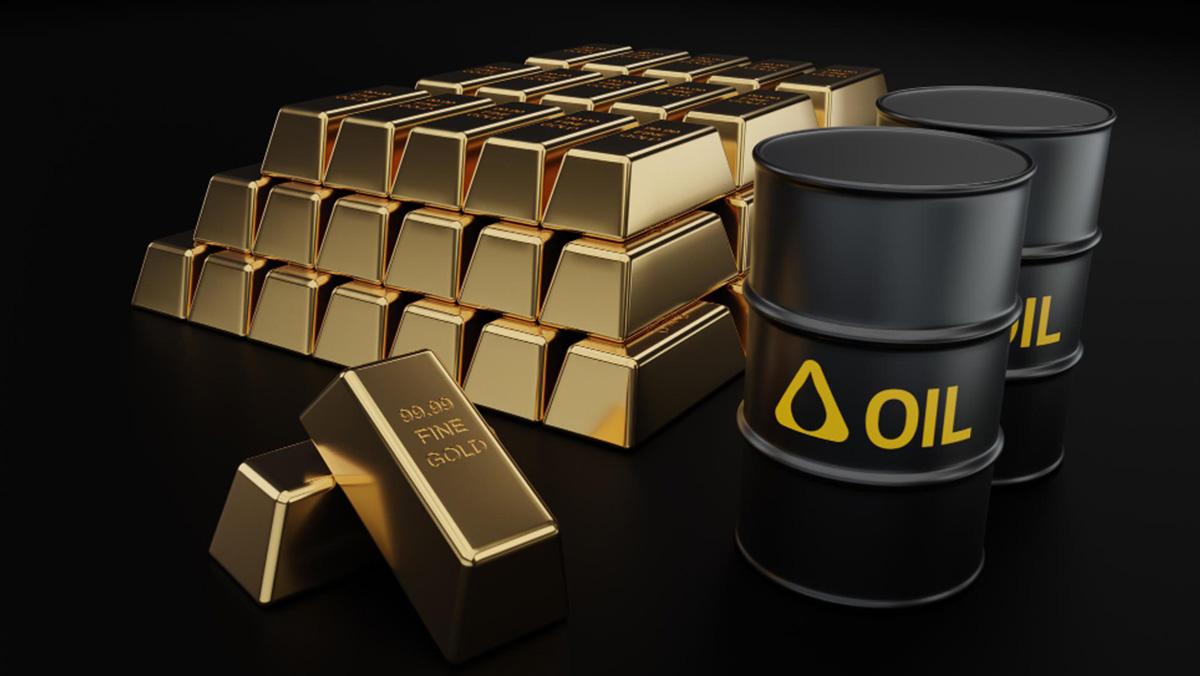
Diversify Your Assets: Explore the World of Commodity Trading
Expand your portfolio with a diverse range of tradable assets, from Oil to Gold
By clicking "Open Demat Account," you agree to our Terms & Conditions, and confirm that you have read our Privacy Policy.
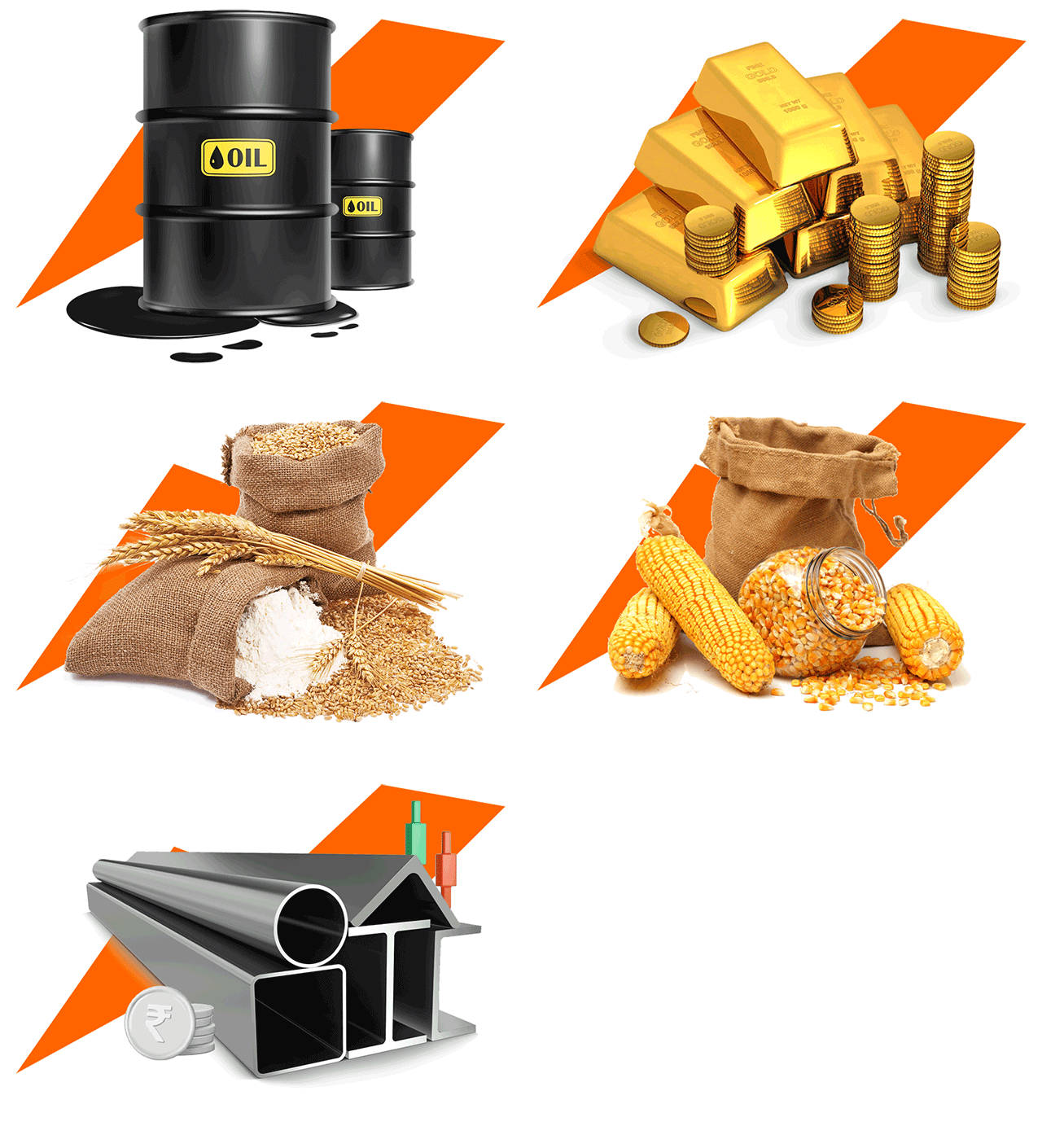
What are the various types of commodities?

Agriculture
Agricultural commodities refer to raw materials derived from farming and agricultural processes. These includes Grains, Oilseeds, Softs, Livestock, Dairy, etc.
Energy
Energy commodities refer to natural resources that are used to produce energy like Crude Oil, Natural Gas, Heating Oil, Gasoline, Diesel, Coal, etc.

Base Metals
Base metals are a group of metals that are widely used in industrial and commercial applications. These includes Copper, Aluminum, Zinc, Nickel, Lead, Tin, etc.

Bullion
Bullion refers to precious metals that are traded in bulk form, typically in the form of bars, ingots, or coins. The most common types of bullion traded in commodity markets include Gold, Silver, Platinum, Palladium.
Why Invest in Commodity Market with Findoc

Diversification
Diversify & reduce your portfolio risk by investing with commodities

Trade from anywhere
Use web or mobile platform to invest in commodities from your couch

Make fast & Precise decisions
Study charts, understand market and place quick orders in commodity segment in real time

Learn
Learn about commodities at Findoc Knowledge Center

Hedging
An agreed purchase or sale of a set amount of a commodity at a fixed price.
How to Open a Demat Account with Findoc?

Step 1
Fill up your information on the sign up form
1
Step 2
Verify Mobile & Email
2
Step 3
Enter the KYC Details
3
Step 4
Get Demat Account details on the registered Email ID
4Documents Required to Open a Demat Account
PAN card is mandatory (Please ensure your photo and sign on the card are clearly visible)
Bank account statements of last 6 months, cancelled cheque and passbook (Any of these)

Aadhaar, passport, driving licence, voter ID, or bank account statements of last 6 months (Any of these)

Bank account statements of last 6 months, 3 months salary slips or ITR (Any of these)

Photo of your signature on a white paper (The signature must match the one on your PAN card)

One passport size photograph is a must (Provide clearly visible and latest photograph)
Start trading commodities today and unlock a world of financial possibilities.
By clicking "Open a Demat Account," you agree to our Terms & Conditions, and confirm that you have read our Privacy Policy.

Access in-depth Market Analysis & Expert Insights
Integrated Market Watch provides market information such as best buy/ sell price and quantity, security specific information, LTP and Net change in real time. Further, it enables previewing of multiple profiles, making it flexible for user to browse various market information.

Order & Trade Management
Powerful Reports

Analysis Tools

Integrated Market Watch
What is Commodity Trading?
Commodity trading involves the buying, selling, transporting, storing, and transforming of physical commodities, along with asset management. This includes raw materials, including metals, energy, and agricultural products, that are key players on the global market level. Traders aim to profit from price changes, but that is not their only goal. They also work to supply customers with what they need. At the same time, they focus on making their supply chain efficient and keeping prices stable. Commodity trading also helps investors build diversified portfolios. It reduces reliance on stocks or bonds while adding the advantage of holding durable real assets.
Understanding How the Commodity Market Works
The commodity market works on the simple rule of supply and demand. If demand for a product is higher than supply, its price goes up. If supply is more, prices fall. Commodities are traded in both physical form (actual delivery of goods) and through contracts, which allow buying and selling without holding the goods. Prices are influenced by factors like global events, weather, and economic conditions. This makes the market dynamic and sometimes unpredictable.
Different Types of Commodity Markets
- Spot MarketsIn a spot market, the exchange of goods happens instantly. Buyers pay, and sellers deliver the product on the spot. For example, buying gold from a jeweller is like a spot trade.
- Futures MarketsIn a futures market, buyers and sellers agree to trade a commodity at a fixed price on a future date. This helps both sides manage risks. Farmers, for example, may sell crops in advance to protect against falling prices.
- OptionsOptions are financial contracts that give the holder the right, but not the obligation, to buy or sell a commodity at a predetermined price within a specified period. This makes them flexible and less risky since the buyer can choose not to go ahead with the trade if prices move unfavourably.
Main Elements of the Commodity Market
The commodity market is made up of four key elements. The first element is the commodity exchange, which serves as the platform for trading activities. The second element is contracts, such as futures and options , that define the terms and rules for these trades.
The third element is the participants, including hedgers who seek stability and speculators who aim to profit from price fluctuations. The fourth element is price, which is influenced by factors like supply, demand, global events, and investor behaviour. Together, these elements create a structured and reliable framework that ensures safe, transparent trading of commodity contracts while providing liquidity, price discovery, and risk management for both producers and investors.
Things to Know Before Investing in Commodities
Commodity prices often fluctuate significantly because of demand, the weather, politics, or other events globally. Unlike stocks, commodities usually require greater knowledge of external factors such as oil supply or crop yield. New investors need to understand the risks they are dealing with, how the market operates, and what their costs are for trading. It is also important to decide whether you want physical commodities or contracts such as futures or options. Clearly defined goals, research, and expert advice are all important in avoiding losses and making better trading decisions.
Steps to Invest in Commodity Trading
To start commodity trading online, you first need to open demat and trading account with a registered broker. Next, decide which commodity you want to trade, like metals, energy, or farm goods. Learn about how the market for that commodity works, including its price movements and risks. You can trade using futures, options, or even invest in commodity funds. Beginners should start small, practise risk management, and seek expert advice before committing larger amounts.
Stay updated with global economic trends, government regulations, and seasonal factors as they can impact commodity prices. Talking to professionals and regularly analysing different charts and reports will help you make a strategic decision. By taking a consistent approach and focusing on your long-term strategy, commodity trading can be a safer, more structured, and more profitable experience.
Smart Strategies for Trading Commodities
One common strategy is trend following, where traders study past price movements and trade in the same direction. Another is hedging, which insulates producers and buyers against unexpected price fluctuations. Arbitrage involves buying in one market and selling in another to benefit from price differences. Mean reversion is also practised, where traders expect prices to revert to their mean over time. The practice of combining research, patience, and stop-loss mechanisms helps investors minimise risks and trade more confidently.
Rules and Compliance in the Commodity Market
SEBI regulates commodities and commodity trading, allowing transparency and fairness in commodity trading in India. Traders must follow rules like maintaining margins, which act as deposits against potential losses. Markets also impose limits on the number of contracts an individual can hold, lowering the opportunity for manipulation. All positions and trades have to be reported to ensure compliance. Adherence to compliance rules ensures regulation of the trades to safeguard the investor and the market system as a whole. Compliance awareness and adherence ensure safe and secure commodity trading investment.
Common Mistakes to Avoid in Commodity Trading
- Trading without proper study of the commodity or market trends.
- Ignoring risk management tools like stop-loss, which protect from heavy losses.
- Using too much leverage can increase profits but also magnify losses.
- Following market rumours or tips blindly instead of relying on facts and research.
- Putting all money in one commodity instead of diversifying across different ones.
- Not keeping track of global news, policies, or weather that affect prices.
- Entering trades emotionally, without a clear plan or strategy in place.
How Commodity Prices Are Set on Exchanges?
Commodity prices on exchanges are determined by the balance of demand and supply. When demand rises faster than supply, prices increase, while excess supply pushes prices down. Apart from this, global events like conflicts, natural disasters, or trade restrictions can quickly change prices. Currency exchange rates, government policies, and interest rates also influence costs. Speculators always influence commodity prices by making forecasts and placing trades based on their predictions. In the end, every factor is obtained by the exchanges, which provide a transparent and fair price discovery process for society to use. This process is now more accessible through the rise of commodity trading online.
How are the Commodity and Stock Markets Interconnected?
The commodity and stock markets affect each other in many ways. When commodity prices rise, companies that use them as raw material face higher costs, which reduces their profits and pushes their stock prices down. For example, rising crude oil prices hurt transport and airline companies. Inflation, driven by higher commodity costs, also lowers investor confidence in shares. On the other hand, when the stock market is weak, investors often move to commodities like gold for safety. This creates a cycle where both markets balance each other, a trend visible in the growth of commodity trading in India.
Types of Traders in the Commodity Market
There are three broad categories of commodity market traders. Hedgers are producers or purchasers who trade to mitigate risk, like farmers selling produce in advance to lock in prices. Speculators do not desire the physical goods; they trade purely to make money on price moves. Arbitrageurs seek discrepancies in price across markets, buying at the low end of one and selling at the high end of another. Collectively, these traders form liquidity, facilitate smoother trades, and make the market more stable for every party involved within the commodity exchange framework.
Advantages and Disadvantages of Commodity Trading
- Advantages:
- Helps diversify your investment portfolio and spread risks.
- Protects against inflation as commodity prices often rise with living costs.
- Offers the chance for good returns due to frequent price fluctuations.
- Provides exposure to global markets beyond local stocks and bonds.
- Some commodities, like gold or silver, are tangible assets with lasting value.
- Disadvantages:
- Prices can be highly volatile, influenced by global events or demand shifts.
- Using leverage may multiply losses if markets move unexpectedly.
- Requires constant monitoring and research, which can be time-consuming.
- Complex for beginners without proper guidance or knowledge.